
When we talk about skin ageing, collagen usually steals the spotlight.
We are constantly told that the answer to younger-looking skin is to make more collagen. Collagen is incredibly important, but it is only one part of a much bigger picture.
Healthy skin also depends on hydration, elasticity, effective cell activity, a strong skin barrier and the skin’s ability to maintain and renew itself.
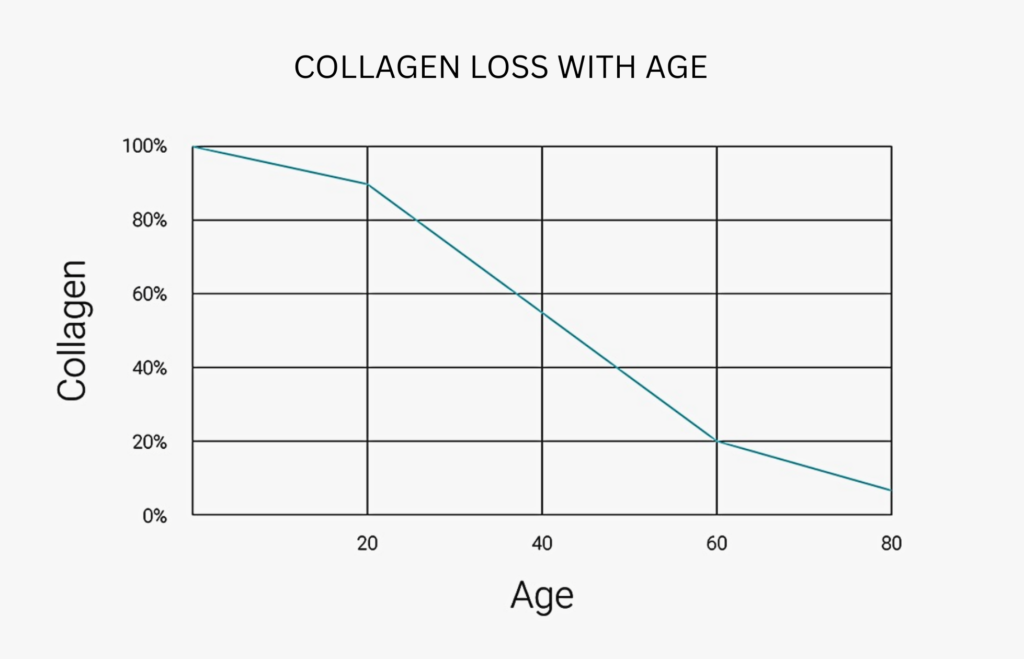
As we age, collagen gradually becomes less abundant and more fragmented. The cells responsible for maintaining the skin also behave differently, while years of sun exposure, environmental damage and changes within the skin can make repair and renewal less efficient.
So perhaps the better question is not simply:
“How do we make more collagen?”
It is:
“What does the skin need to function well?”
It is not just about asking the skin to work harder
Imagine asking a chef to prepare a meal.
You could encourage them to work faster, but the quality of the result would still depend on the ingredients available, the equipment they are using and the condition of the kitchen around them. Your skin works in a similar way.
Fibroblasts are cells found within the deeper layers of the skin. One of their roles is to produce and maintain collagen, elastin and other substances that help give the skin its structure, flexibility and hydration.
Collagen-stimulating treatments give these cells a reason to become more active. Depending on the treatment, this may be achieved through controlled injury, heat, an injectable product or signals from your own blood.
That stimulus can be incredibly useful, but it is not the only way to think about improving skin quality.
Alongside encouraging activity, we can consider:
- The ingredients involved in the skin’s normal processes
- The hydration and condition of the tissue around its cells
- How effectively the skin repairs and renews itself
- The daily protection and care the skin receives
In our kitchen analogy, one treatment might encourage the chef to start cooking, another might provide useful ingredients, while another may focus on supporting the kitchen and the environment in which the work takes place.
These approaches can overlap, but they are not identical. This is why treatments that all promise to improve ‘skin quality’ may work in quite different ways.
Where does Celora Vita fit?
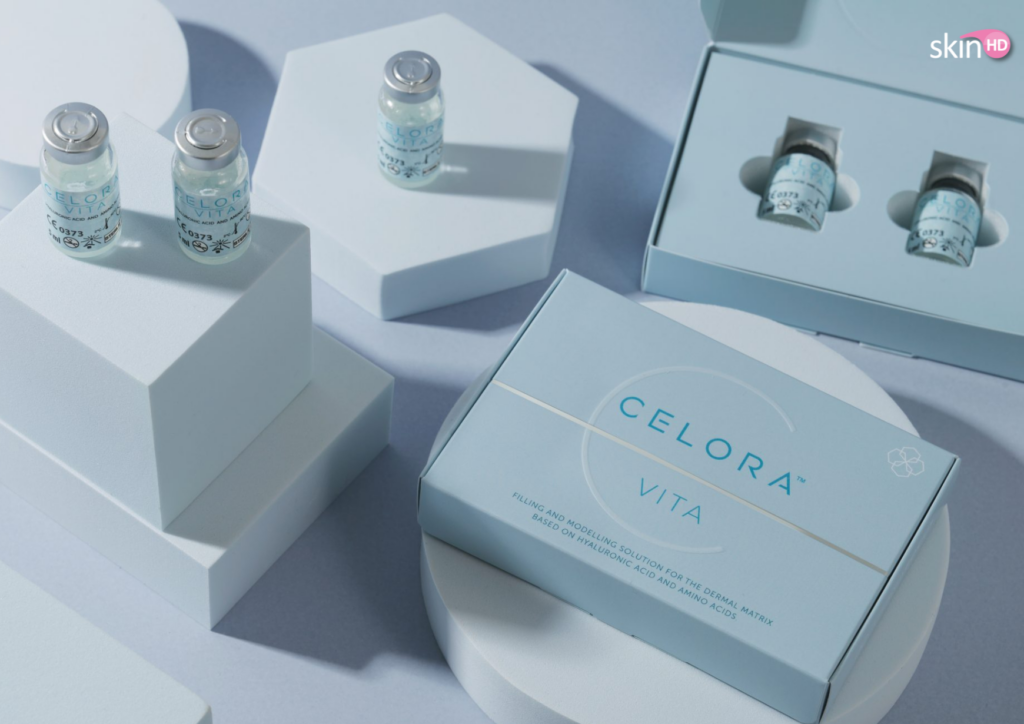
Celora Vita takes an ingredient-focused approach. It combines low-molecular-weight hyaluronic acid with nine carefully selected amino acids.
Hyaluronic acid helps support hydration within the skin. Amino acids are building blocks the body uses in many normal processes, including the production of structural proteins such as collagen and elastin.
Rather than simply asking the skin to work harder, Celora Vita is designed to provide some of the ingredients involved in the work.
Returning to our chef, it is a little like making sure there are suitable ingredients available before expecting a good meal.
This does not mean that every visible change in the skin is caused by a shortage of amino acids. Skin ageing is far more complex than that. Instead, Celora Vita offers a different way to support skin quality alongside the many processes already taking place within it.
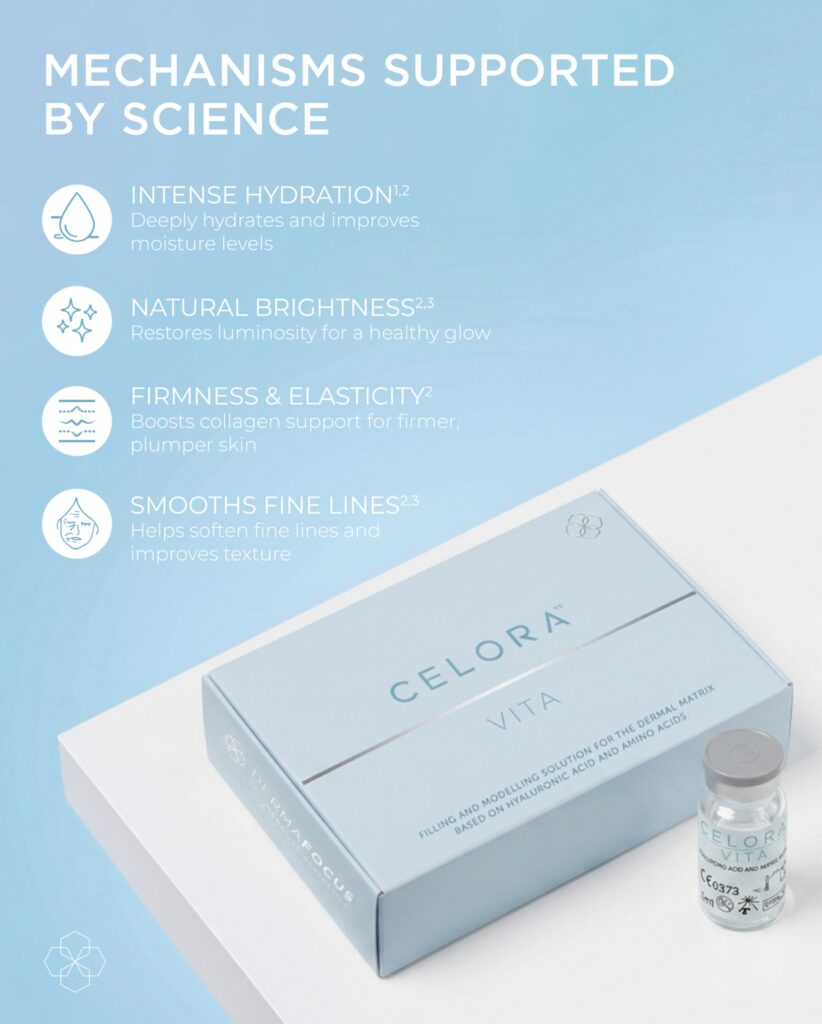
The aim is gradual improvement rather than dramatic transformation. Clients may notice better hydration, smoother texture, improved elasticity and a fresher, healthier-looking appearance as the treatment course progresses.
How is this different from a collagen stimulator?
The simplest distinction is this:
A collagen stimulator primarily encourages the skin to increase its activity. Celora Vita provides ingredients intended to support that activity.
Collagen-stimulating treatments can be particularly useful when we want to encourage renewal, improve firmness or progressively strengthen the skin’s structural support.
Celora Vita is better understood as a skin booster. Its main purpose is to support hydration and overall skin quality without adding facial volume or changing the shape of your features.
These approaches do not have to compete with one another. In some treatment plans, improving hydration and supporting the skin’s normal processes may be the priority. In others, collagen stimulation may be more appropriate. They may also be used at different points within a longer-term plan.
The right choice depends on what your skin is showing us and what you would genuinely like to improve.
What can Celora Vita help with?
Celora Vita may be considered when the skin appears or feels:
- Dull or tired
- Dehydrated
- Rough or uneven in texture
- Less elastic or firm
- Affected by early or moderate signs of ageing
- In need of general skin-quality support
It is not intended to replace lost facial volume, reshape the face or produce a dramatic lifting effect. It also will not directly treat every cause of redness, pigmentation, acne or scarring.
This distinction matters because it helps us choose a treatment for the job it is actually designed to do, rather than expecting every skin treatment to achieve the same result.
Why understanding your skin comes first
It can be tempting to choose a treatment because it is new, popular or described as the next big thing in collagen production. However, two people who both feel that their skin looks “tired” may need completely different things.
One person may primarily be experiencing dehydration or a disrupted skin barrier. Another may have sun damage, pigmentation or redness. Someone else may be noticing changes in firmness, texture or facial volume.
Even the most advanced in-clinic treatment works best when the foundations of skin health are being supported too.
Daily sun protection, appropriate skincare, consistency and realistic lifestyle measures all influence how the skin looks and behaves. A treatment can support your skin, but it cannot replace the everyday habits that protect it.
That does not mean you need a perfect skincare routine before considering treatment. It simply means we achieve better, more sustainable results when we look at the whole picture.
At SkinHD, this is why education comes before recommendation. We want to understand your skin, your concerns and what may be contributing before deciding which treatment deserves a place in your plan.
Sometimes the first step may be improving your home routine or supporting the skin barrier. At another point, a skin booster, collagen stimulator or regenerative treatment may be appropriate.
Healthy skin is the goal. Treatments are the tools.
Healthy skin is about more than collagen
Collagen matters, but healthy skin cannot be reduced to how much collagen it contains or how strongly we can stimulate it.
The skin also needs hydration, protection, suitable building blocks and an environment in which its cells can function effectively.
This broader understanding helps explain why there is no single treatment that does everything. It also allows us to make more thoughtful choices about what we are trying to improve and how best to approach it.
Sometimes the skin may benefit from being encouraged to work harder. Sometimes it may benefit from additional support.
Often, the most effective plan considers both.
Could Celora Vita support your skin?
If your skin feels dull, dehydrated, less elastic or simply not as healthy as it once did, Celora Vita may be an option worth exploring.
It offers a gradual, skin-quality-focused approach for clients who want to improve hydration, texture and overall skin health without adding facial volume or significantly changing their appearance.
You can learn more about the treatment, recommended course, recovery and expected results on our Celora Vita treatment page.
If you are unsure what your skin needs, you do not have to choose a treatment before coming to see us. A SkinHD consultation gives us the opportunity to assess your skin, listen to your concerns and explain which options may be most appropriate.
Curious about what your skin actually needs?
Book a consultation and let’s take a closer look!